Aether Forge
Crafting storms into weapons is the rare RPG idea that is stranger in practice.
The Open-Air Crucible
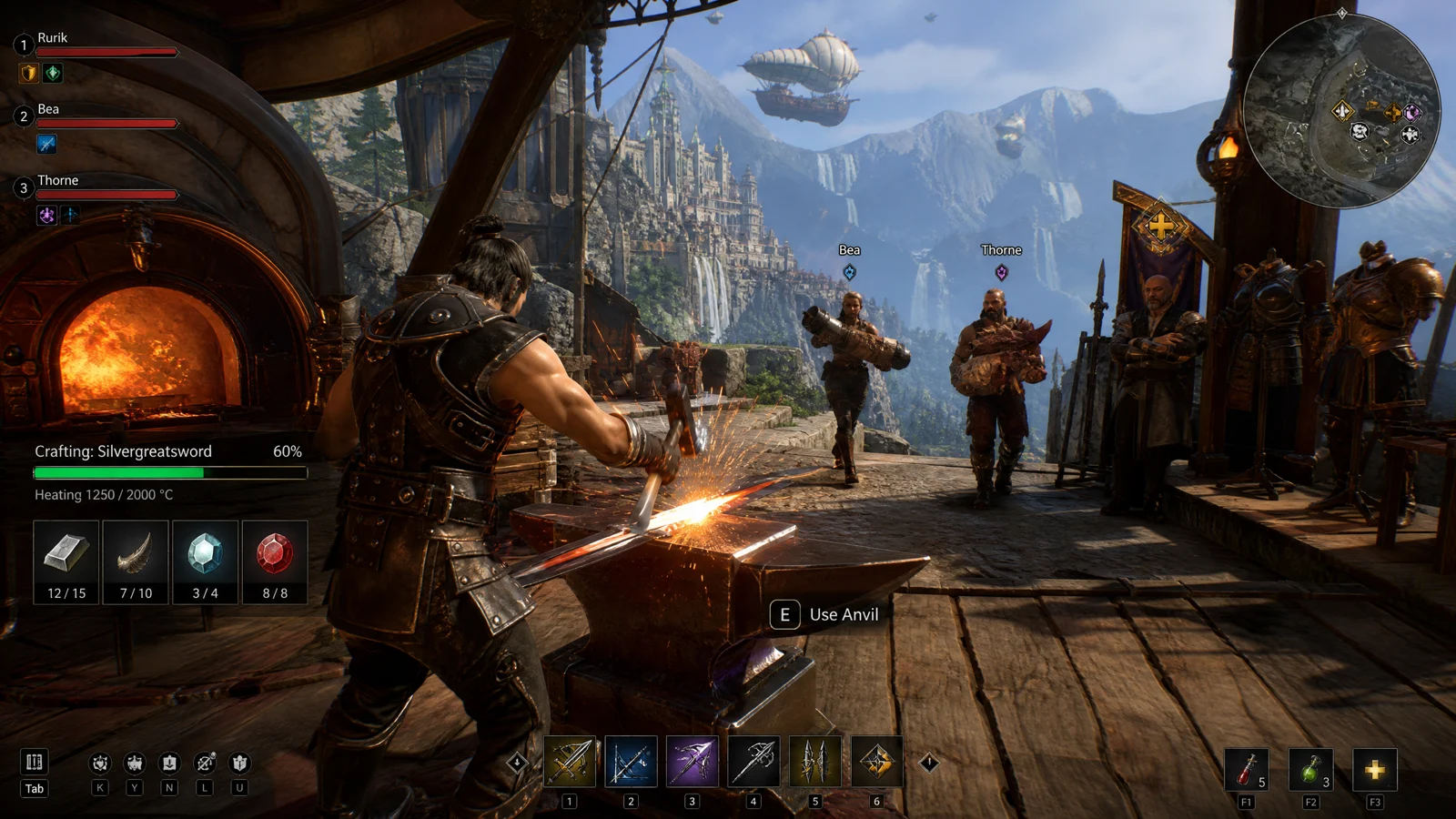
The latest sensation in the live craft-tournament circuit is Aether Forge, a breathtaking exhibition of elemental manipulation. In this high-stakes competition, the traditional workshop is entirely abandoned. Instead, artisans find themselves in sprawling, open-air environments where the weather serves as both raw material and catalyst for creation. The premise is demanding: competitors must capture ambient wind, torrential rain, and blistering geothermal heat to shape intricate tools. It is a true test of adaptability, requiring participants to read atmospheric conditions and adjust forging techniques on the fly. When a sudden squall rolls in, the master crafter does not seek shelter; they harness the gale to supercool a newly tempered blade.
What sets Aether Forge apart is the sheer tactile depth of its mechanics. The forging process is not a matter of navigating menus or waiting for progress bars. It is a kinetic, rhythm-driven experience where every strike of the hammer and every gust of channeled wind must be perfectly timed. Players physically pull elements from the environment, wrestling with a thunderstorm to infuse a shield with electrical charge, or capturing the updraft of a thermal vent to make an axe impossibly light. The tactile feedback translates the raw power of nature directly into the player's hands, making every successful creation feel like a hard-won victory.
Harnessing the Storm
The core loop revolves around the mastery of elemental synergy. Each arena introduces a dynamic weather system that shifts unpredictably, challenging competitors to pivot strategies mid-craft. A standard challenge might ask players to forge agricultural tools, but when a heatwave abruptly transitions into a torrential downpour, thermal shock mechanics come into play. Savvy makers will use the sudden drop in temperature to rapidly quench their metals, locking in structural integrity, while those caught off guard may find their materials hopelessly fractured. This constant push and pull between the artisan's intent and the environment's whims creates a profoundly engaging gameplay rhythm.
Furthermore, the game excels in its environmental design. The open-air arenas are active participants in the crafting process. From the jagged peaks of the Zephyr Highlands, where constant gales provide endless aerodynamic energy, to the smoldering calderas of the Ignis Basin, every location offers unique elemental resources and distinct hazards. The visual and auditory design of these arenas is spectacular. The roar of a captured cyclone and the hiss of rainwater vaporizing against white-hot steel create a sensory symphony that immerses the player entirely in the act of creation.
The Spectacle of Creation
As a live craft-tournament magazine, we must highlight the phenomenal viewer mode integrated into Aether Forge. Recognizing that high-level crafting is a performance art, the developers have crafted presentation tools that turn every match into a gripping viewer sport. Viewers are treated to dynamic camera angles highlighting the intricate details of the forging process, alongside real-time telemetry displaying the temperature of materials and the stability of elemental infusions. This transparency allows the audience to appreciate the razor-thin margins between a masterpiece and a catastrophic failure. The viewer mode elevates the game from a solitary crafting experience to a communal event.
The tournament structure itself is robust, offering formats ranging from rapid-fire sprint crafts to grueling endurance marathons. The presentation is slick and professional, mirroring the production quality of premier athletic events. Commentator integration tools and interactive audience polls further blur the line between player and viewer, creating an electrifying shared experience. Whether you are a seasoned artisan competing for the championship or a dedicated fan joining in, the tournament ecosystem is designed to keep you marveling at the ingenuity on display.
Frictions in the Forge
Despite its many triumphs, Aether Forge is not without its structural flaws. The most glaring issue lies within its inventory management system. As players accumulate a vast array of elemental catalysts, raw ores, and specialized tools, the interface struggles to keep pace. Sorting through the inventory becomes a tedious chore, breaking the immersive flow of the open-air workshop. In a game where split-second timing is crucial, fumbling through poorly organized menus to find a specific flux is deeply frustrating. A more intuitive, physically grounded organization system would go a long way in alleviating this bottleneck.
Additionally, the pacing of the competitive circuit is occasionally hampered by the structure of its qualifying rounds. While the initial climb through the amateur ranks is thrilling, players will quickly find themselves subjected to repeated, overly similar qualifying events before they are allowed to advance. These repetitive early stages can feel like a grind, lacking the dynamic environmental variations that define the game's later arenas. A more streamlined progression system would significantly improve the momentum of the campaign and ensure that the journey to the top remains engaging.
Strengths
- Tactile crafting mechanics that reward precision.
- Dynamic weather combinations force constant strategic adaptation.
- A robust viewer mode turns crafting into a thrilling live event.
Limitations
- Cumbersome inventory sorting interrupts the flow of gameplay.
- Repeated, grind-heavy qualifying rounds stall the campaign's momentum.
Disclosure: Aether Forge, its associated studio, and this review are entirely original, fictional concepts created expressly for the bexuqaro.info domain. This article does not describe or review any real-world commercial product or service.
A clear score with visible reasoning.
Controls, structure, presentation and long-term value inform the final number.