Echo Protocol
A tense infiltration game where sound briefly reveals the route ahead.
Welcome to the Grid: The Anatomy of the Arena
This review examines the phenomenal performance metrics and architectural triumphs of Echo Protocol. For those joining in to the game for the first time, this is not your standard physical sprint. The competitors, known as runners, are dropped into stark, brilliantly lit brutalist arenas where the architecture itself is the primary adversary. The concrete expanses offer no obvious exits, no painted lines to guide the desperate dashes. Instead, the geometry is entirely unresponsive until the runner initiates a sound pulse. It is a mesmerizing display of spatial awareness and acoustic mapping, demanding that challengers literally listen to the shape of the room before they make their move.
What makes these arenas so compelling to watch is their unyielding brightness. We are accustomed to seeing stealth and navigation challenges cloaked in shadow, relying on the cover of darkness to build tension. Echo Protocol inverts that dynamic entirely. The blindingly white concrete and sheer monolithic structures leave the runner completely exposed. The tension arises not from what is hidden in the dark, but from what is invisible in the light. When a runner snaps their fingers or stomps their heel, the resulting sound pulse ripples outward, momentarily painting the hidden paths, handholds, and fatal drops in a cascading wireframe of sonic data. It is a brilliant spectacle of cause and effect.
Rhythm and Flow: Mastering the Acoustic Sprint
The pacing of Echo Protocol is where the true elite separate themselves from the amateurs. Our analysts have spent hours reviewing the telemetry, and the confident rhythm of the level design is nothing short of masterful. Early stages gently introduce the mechanics, allowing runners to pulse, observe, and move in a staccato cadence. However, as the campaign progresses into the deeper brackets, the arenas demand a seamless, continuous flow. The most thrilling runs we have witnessed involve competitors chaining their pulses, using the acoustic feedback of their own footsteps to constantly refresh their mental map of the shifting geometry without ever breaking stride.
This rhythm is heavily reinforced by the game's exceptional audio engineering. The soundscape is sparse, clinical, and aggressively responsive. Every surface material returns a slightly different frequency, allowing seasoned runners to differentiate between a solid concrete landing and a glass-paneled pitfall purely by the pitch of the echo. It is a masterclass in auditory navigation. For viewers at home, the game highlights this with an accessible visual pulse mode, translating the complex sonic frequencies into crisp, color-coded ripples on the screen.
The Friction Points: Where the Momentum Stalls
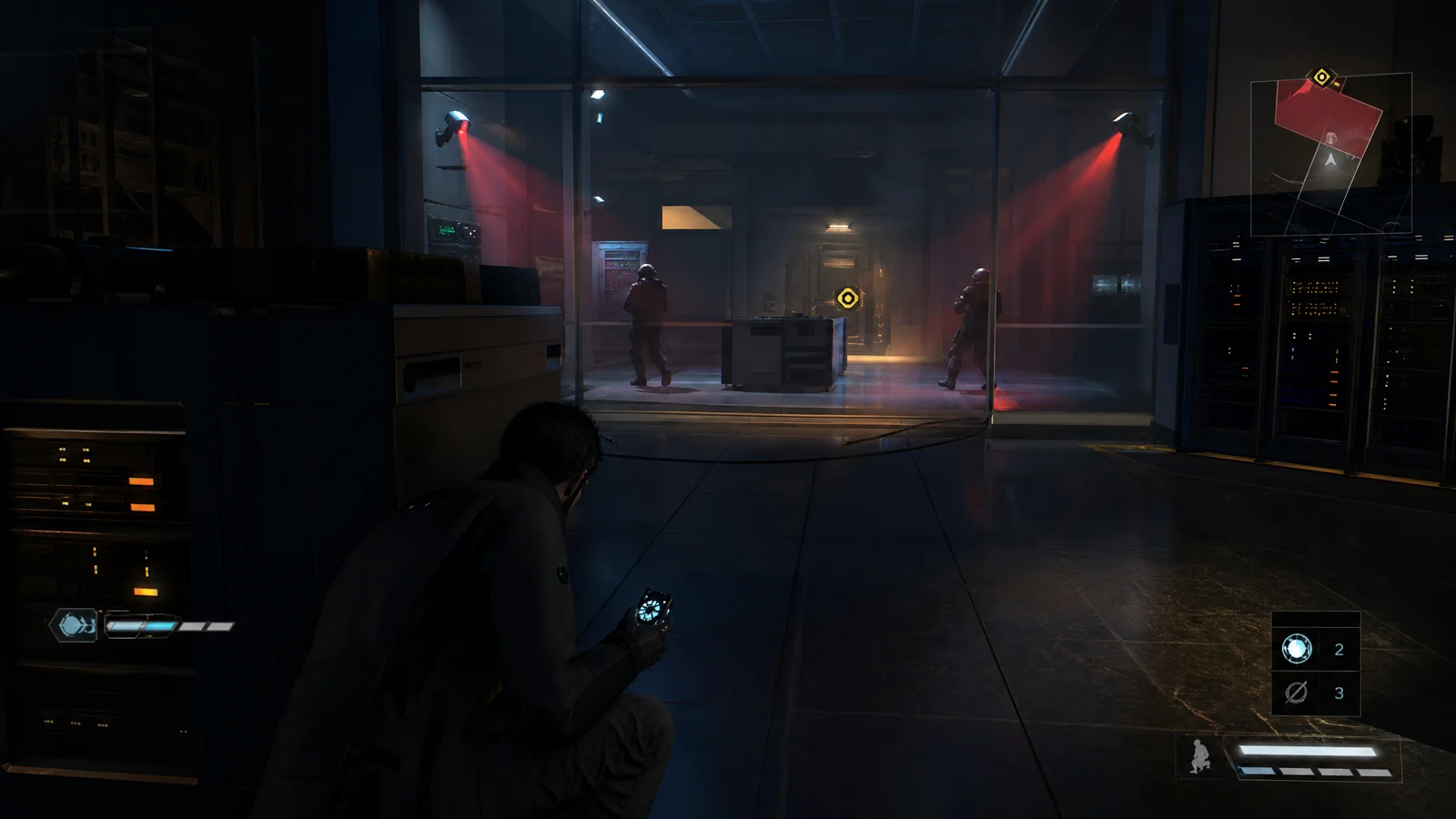
Despite the overwhelming success of the arena designs, our review team must address the friction points that have frustrated even the most seasoned competitors. The primary point of contention lies within the stealth scoring parameters. In certain sectors, runners are required to bypass acoustic sensors without triggering an alarm. While the premise is sound, the execution feels rigid. The scoring algorithms penalize even the slightest ambient noise generated by a landing, forcing runners to adopt a frustratingly slow pace that breaks the exhilarating momentum established in previous zones.
Furthermore, as we push into the final, high-stakes stages of the tournament, the architectural variety begins to wane. The designers have leaned heavily—perhaps too heavily—on rotating gate mechanisms to increase the difficulty. While initially an interesting variable, requiring runners to time their pulses to the exact rotation of the barriers, the sheer repetition of these gates in the final gauntlet feels like an artificial inflation of difficulty. Rather than testing the runner's ability to interpret complex new geometries, the arenas devolve into simple timing puzzles, stalling the kinetic energy that makes Echo Protocol such a compelling spectacle.
The Final Verdict: A Strong Final Verdict
Ultimately, Echo Protocol stands as a monumental achievement in competitive spatial navigation. The core loop of pulsing, mapping, and sprinting through blindingly bright brutalist architecture provides some of the most thrilling set-piece moments of the season. The developers have successfully gamified echolocation, wrapping it in a clinical, high-stakes aesthetic that demands perfection. The integration of the visual pulse mode for players ensures that the brilliance of the runners' strategies is always legible.
While the rigid stealth scoring and the overreliance on rotating gates in the late game occasionally dampen the momentum, these flaws do not overshadow the sheer exhilaration of a flawless run. With a final score of 8.8, Echo Protocol cements its place as a premier event in the competitive calendar. It challenges our understanding of navigation, strips away the comfort of visual certainty, and proves that sometimes, the most dangerous obstacles are the ones you can only hear.
Strengths
- Innovative use of sound as the primary navigation tool.
- Confident, rhythmic level design that encourages continuous flow.
- Accessible visual pulse mode for viewer clarity.
Limitations
- Stealth scoring parameters can feel overly rigid and momentum-breaking.
- Final stages suffer from an overuse of rotating gate mechanisms.
Disclaimer: Echo Protocol, its development studio, and the contents of this review are entirely original fictional concepts created exclusively for the bexuqaro.info domain. This article does not represent a real commercial product, and any resemblance to actual games or entities is purely coincidental.
A clear score with visible reasoning.
Controls, structure, presentation and long-term value inform the final number.